

Banner Image

What Is Structured Cabling and How Does It Work?

What Is Structured Cabling and How Does It Work?

Introduction

Structured cabling is the backbone of modern connectivity for businesses of all sizes. It refers to a standardized network of cables and hardware that supports voice, data, and video services in an organized way. In this blog, you’ll learn what structured cabling is, how it works, why it matters for your business, the key components involved, and the many advantages it offers. Whether you are setting up a new office network or upgrading your current infrastructure, understanding structured cabling helps you make smarter decisions about reliability, performance, and future growth.

Understanding Structured Cabling

Structured cabling is a standardized cabling system designed to support multiple hardware uses and communication systems. Instead of running separate cables for phones, internet, CCTV, and other systems, structured cabling brings everything together into one clean and organized network.

It replaces messy and confusing wiring with a well-planned layout that is easier to manage, upgrade, and maintain. This makes it ideal for businesses that rely on smooth communication and fast data flow.

Simply put, structured cabling acts like a strong foundation for your entire IT and communication setup.

How Structured Cabling Works

Structured cabling works by following a clear design and installation process that connects all devices to a central network point. Here’s how it works step by step:

1. Planning and Network Design

The process starts by understanding the space, number of users, devices, and future expansion needs. A proper layout is created to ensure efficient cable routing and connectivity.

2. Cable Installation

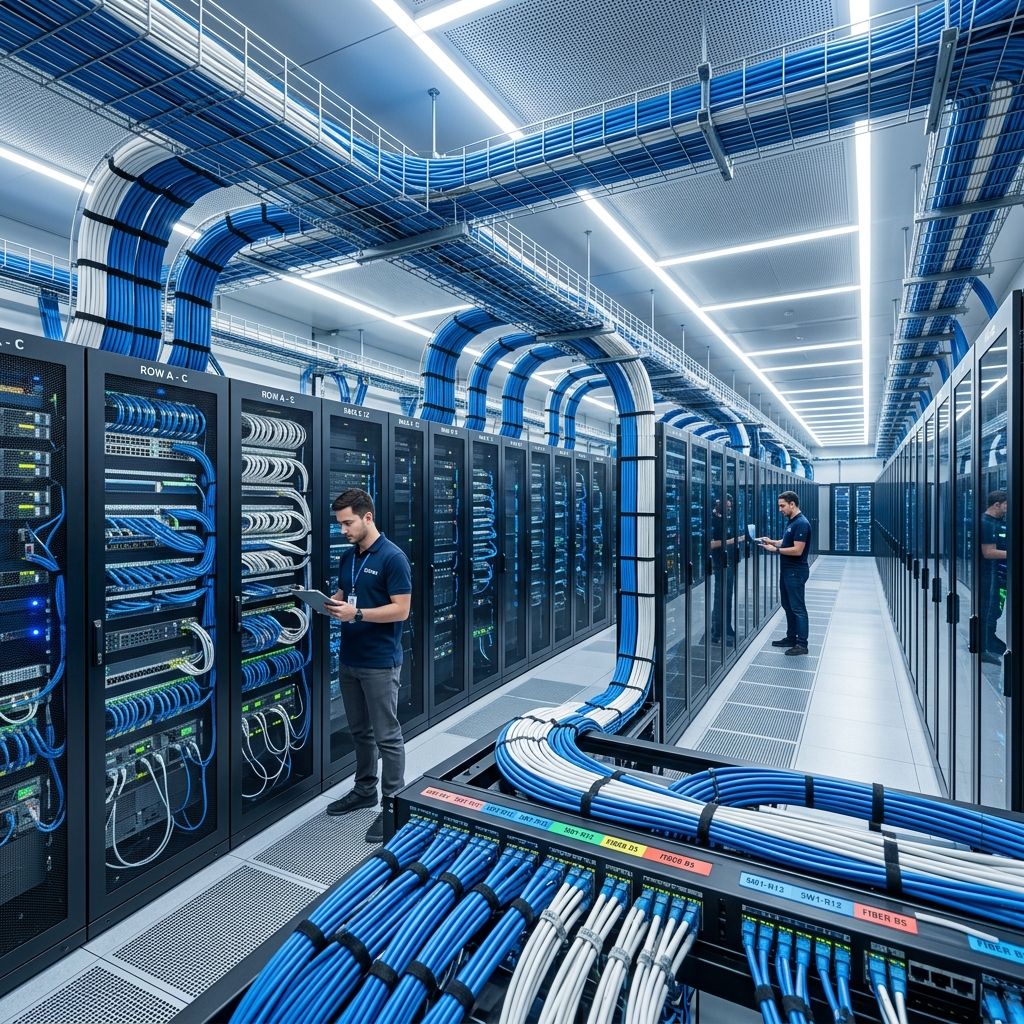
High-quality cables such as Cat5e, Cat6, or fiber optic cables are installed through walls, ceilings, or cable trays. These cables are placed carefully to avoid interference and physical damage.

3. Central Connection Point

All cables lead to a central location such as a server room or communication cabinet. From here, they connect to switches, routers, and other network equipment.

4. Testing and Verification

After installation, the system is tested to ensure strong signal quality, high speed, and reliable performance. This step ensures everything works smoothly from day one.

5. Ongoing Management

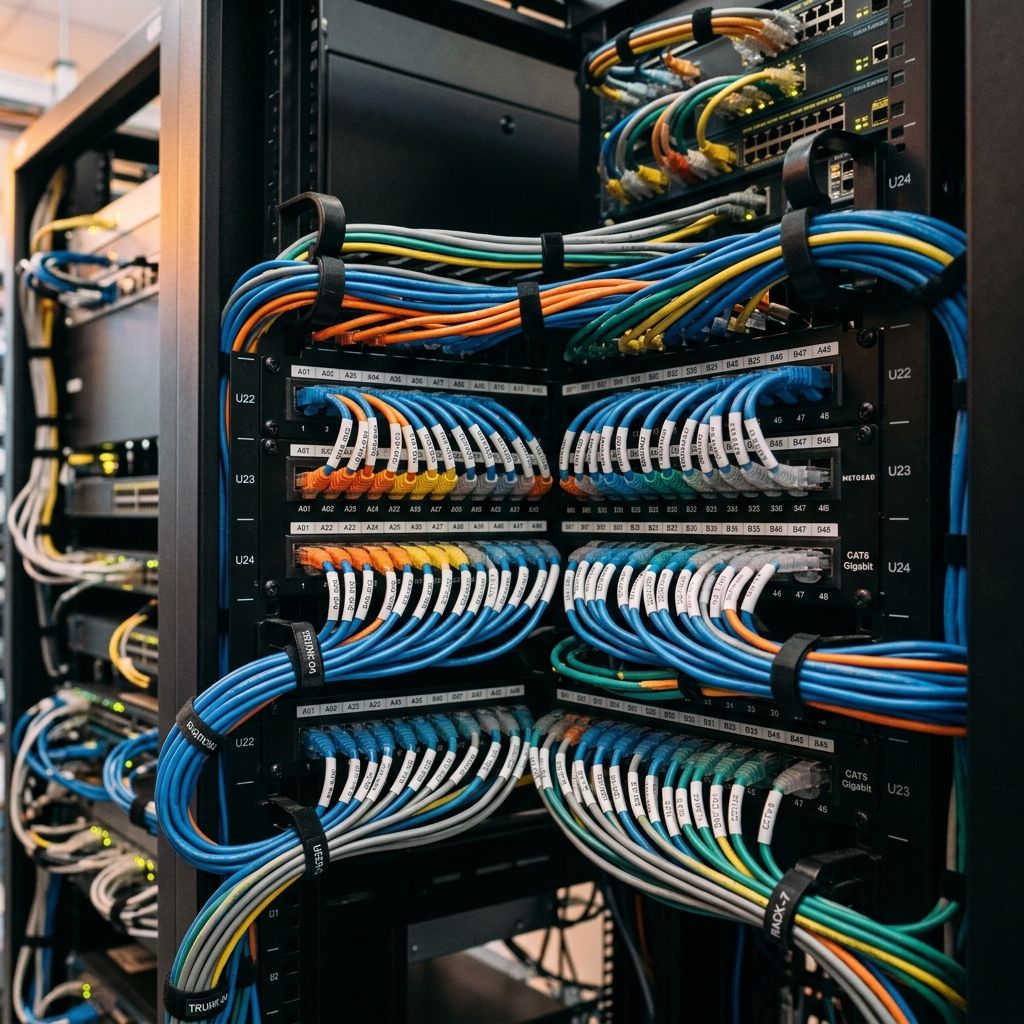
The system is properly labeled and organized, making it easy to manage, troubleshoot, or upgrade in the future.


Main Components of a Structured Cabling System

A structured cabling system includes several important components that work together:

  • Cables: Copper cables and fiber optic cables that carry data and signals
  • Patch Panels: Central points where cables are connected and managed
  • Racks and Cabinets: Used to hold and protect networking equipment
  • Connectors and Wall Outlets: Allow devices to connect easily to the network
  • Cable Management Accessories: Trays and organizers that keep cables neat and secure

Each component plays a key role in ensuring smooth communication and long-term reliability.

Why Structured Cabling Is Important for Businesses

Structured cabling offers many benefits that make it a smart investment for any business environment.

1. Better Network Performance

Organized cabling reduces signal interference and improves data speed, resulting in a faster and more stable network.

2. Easy Troubleshooting

When cables are clearly labeled and organized, identifying and fixing issues becomes much quicker and simpler.

3. Supports Business Growth

Structured cabling is designed to scale. Adding new devices, workstations, or systems becomes easy without major changes.

4. Reduced Downtime

A reliable cabling system minimizes network failures and ensures business operations continue without interruptions.

5. Cost-Effective in the Long Run

Although initial installation may seem higher, structured cabling reduces maintenance costs and avoids frequent rewiring.

6. Supports Multiple Systems

One cabling system can support internet, voice communication, security systems, access control, and more.

Structured Cabling and Modern Technology

Modern businesses depend on technologies such as cloud systems, video meetings, smart security, and high-speed data access. Structured cabling provides a solid foundation to support these technologies efficiently.
With proper cabling in place, businesses can enjoy seamless communication, better productivity, and improved system reliability across all departments.

Conclusion

Structured cabling is a vital part of any modern business infrastructure. It provides a clean, organized, and reliable network that supports current operations and future expansion. From improved performance and easy management to long-term cost savings, structured cabling delivers value at every level.

For businesses looking to build strong and dependable network systems, partnering with experienced professionals makes all the difference. Cybotech Technology LLC offers expert structured cabling solutions designed to support business growth, performance, and long-term reliability.


Get in touch